
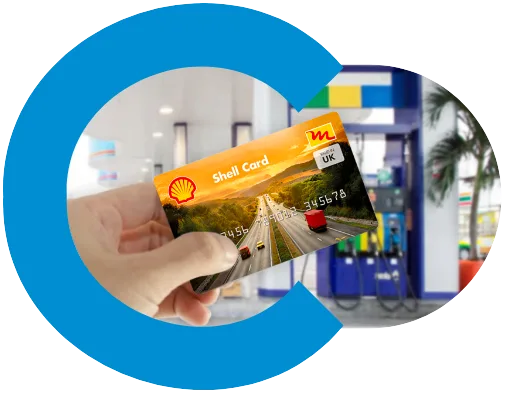
The Lowdown on Diesel Cards: More Than Just a Piece of Plastic
Let’s cut to the chase. You’re running a business with vehicles—trucks, vans, maybe heavy equipment. Every week, drivers are hitting the pumps, receipts are piling up on your passenger seat (or getting lost), and you’re staring at a bank statement that just says “FUEL” followed by a terrifying number. There’s got to be a smarter way, right? There is. It’s called a diesel card, or more broadly, a fleet fuel card. But this isn’t just a glorified corporate credit card you give to your team. It’s a command center for your fuel spend, a data goldmine, and a surprisingly powerful tool for cutting costs and boosting efficiency. Forget the boring brochures; let’s talk real-world benefits and pitfalls.
Way More Than Just Paying at the Pump
First, shake the idea that this is just a payment method. A modern diesel card is a full-blown management system. Its core superpower is control. You’re no longer handing out cash or personal credit cards and hoping for the best. You can set limits and rules directly on each card. Need to restrict a driver to diesel-only purchases? Done. Want to cap the fuel volume per transaction or per day? Easy. Worried about fill-ups on weekends or after hours? You can lock that card down to specific days and times. It’s about eliminating “fuel slip”—that mysterious gap between what was bought and what was actually needed for the job.
Then there’s the detailed reporting. This is where the magic happens for us data-hungry professionals. Your standard company card transaction might say “Gas Station, $125.43.” Useless. A fleet card transaction shouts: “Tuesday, 3:14 PM, Driver Smith, Truck 7, 32.1 gallons of Diesel 2 at $3.129/gallon, odometer reading 124,587, location: I-95 North, Exit 52.” Suddenly, you have a story. You can track MPG trends per vehicle, spot irregular fueling patterns (why is Truck 3 getting filled up every other day when it’s on a local route?), and see exactly where your money is going. This isn’t about playing Big Brother; it’s about catching mechanical issues early (a sudden drop in MPG signals maintenance), preventing misuse, and having concrete data for client billing or internal chargebacks.
The Money-Saving Superpowers: It’s Not Just the Price at the Pump
Okay, you’re getting control and data. But what about the bottom line? Here’s where the financial artillery rolls in.
* Direct Discounts & Base Pricing: Many fleet cards negotiate pricing with networks of stations. You might get a “cash” price that’s a few cents per gallon below the posted credit price. Some operate on a cost-plus model, where you pay the wholesale price plus a fixed fee. The key is predictability, shielding you from some of the day-to-day station markups. * Zeroing In on Waste: This is the silent budget killer. Without controls, you get driver fraud (filling up personal vehicles, buying cigarettes and soda on the company dime), inefficient routing (drivers taking longer routes to their “favorite” station), and sheer lack of oversight. A card with strong controls and clear reporting slams the door on most of this. Think of it as putting a fence around your fuel budget. * The Admin Time Suck (Solved): How many hours does your bookkeeper or you spend each month collecting crumpled receipts, manually entering data, chasing drivers for missing info, and trying to reconcile it all? A fleet card automates 95% of this. Transactions flow directly into your accounting software or into a clean, exportable report. The ROI isn’t just in cents-per-gallon; it’s in hours-per-month saved for your team to do actual work. * The IFTA Lifesaver: If your business crosses state lines, you know the quarterly horror that is the International Fuel Tax Agreement (IFTA) reporting. Manually calculating gallons purchased and miles driven per state is a special kind of accounting hell. Most fleet cards automatically categorize purchases by state and pair seamlessly with GPS/telematics data for miles-per-state. They can even generate pre-filled IFTA reports. For anyone dealing with this, the card pays for itself in sanity preservation alone.
Choosing Your Weapon: It’s Not One-Size-Fits-All
All fuel cards are not created equal. Picking the wrong one can leave you frustrated. Here’s your checklist:
* Network, Network, Network: This is the most critical question. Where do your drivers actually fuel? A card with a massive national network sounds great, but if it’s not accepted at the truck stops or regional chains your team frequents, it’s worthless. Some cards are tied to a single brand (great if you only use them), while others are open-loop and accepted anywhere that takes a major credit card (more flexibility, but sometimes fewer controls). You need the right balance of coverage and convenience for your operational footprint. * Data & Reporting Depth: Don’t just ask for “reports.” Ask for a demo. Can you easily see MPG by vehicle? Can you filter by driver, date range, or location? How easy is it to export? The interface should be intuitive enough for a quick glance but powerful enough for deep dives. * Fee Structure: Read the fine print. Some cards have monthly fees per card or account fees. Others make money on transaction fees. Some have no fees but slightly higher fuel prices. Understand the total cost of ownership. A card with a $5 monthly fee but superior reporting and controls might be cheaper in the long run than a “no-fee” card that hides costs in poor pricing or eats up your staff’s time. * Integrations: Does it plug into your existing workflow? If you use QuickBooks Online, Fueling, or a specific fleet management software (like Samsara, Geotab, Verizon Connect), check for direct integrations. This seamless flow of data is what transforms a simple payment tool into a central nervous system for your fleet. * The Extras: Look at the value-added services: * Discounts on Tires/Oil/Maintenance: Some cards partner with service centers for discounts. * Roadside Assistance: A flat tire or breakdown is less stressful if it’s bundled into your card service. * Dedicated Account Management: For larger fleets, having a real human to call is worth its weight in gold.
Common Pitfalls and How to Dodge ‘Em
Even a great tool can backfire if implemented poorly.
* Set It and Forget It Syndrome: Issuing cards without setting clear rules is like giving out blank checks. You must configure purchase controls (fuel only, maybe carwash/additives), time restrictions, and volume limits from day one. * Failing to Train Your Team: If drivers see the card as just a restrictive “spy tool,” you’ll get pushback and mistakes. Frame it positively: “This card makes your life easier—no more saving receipts, we get better pricing, and it helps us keep the trucks running better.” Explain the “why.” * Not Reviewing the Reports: Data is only power if you use it. Schedule a monthly 15-minute review. Spot the anomalies—the outlier transaction, the sudden dip in a vehicle’s performance. This is where you find real cost savings and operational issues. * Choosing Solely on Price-Per-Gallon: The cheapest fuel price from a card with a terrible network or no reporting is a false economy. Factor in the total value: controls, reporting quality, admin time savings, and network coverage.
Where This Is All Heading (Hint: It’s Connected)
The diesel card isn’t living in a vacuum. Its future is locked in with other tech. Integration with telematics and GPS is the big one. Imagine this: Your truck’s telematics system pings that it’s low on fuel. It sends the truck’s location and fuel needs directly to the fuel card provider. The provider checks its network, finds the best-priced, most convenient station on the route, and even sends the pump a pre-authorization so the driver just has to pull in and fill up. The transaction is automatically matched to the vehicle, driver, and route. This is the direction of real-time, automated fuel management.
Furthermore, as the industry slowly evolves, cards are beginning to accommodate alternative fuels—CNG, electric charging, even hydrogen. The principle remains the same: controlled payment, detailed data, and streamlined management, regardless of what’s powering your fleet.
Making The Call For Your Business
So, does your business need a diesel card? Let’s break it down: * You’re probably a prime candidate if: You have more than two vehicles, your fuel spend makes you wince each month, you’re tired of receipt chaos, you cross state lines, or you simply have a nagging feeling that you’re not fully in control of where the fuel budget is going. * Start simple if you’re small: Even a basic card from a major network with simple reporting and diesel-only controls can revolutionize a small operation. You don’t need the enterprise-level system on day one. * The bottom-line question: Will the savings (in hard costs and soft/admin time) and the gained control outweigh the fees and effort of implementation? For the vast majority of businesses with moving assets, the answer is a resounding yes.
Ultimately, a diesel card is a force multiplier for business owners and fleet managers. It’s the tool that turns a volatile, messy, opaque expense into a manageable, analyzable, and controllable line item. It puts you back in the driver’s seat, giving you the clarity and command to steer your fleet—and your budget—in the right direction. In today’s competitive landscape, where every margin matters, taking control of your fuel spend isn’t just an admin task; it’s a straight-up strategic financial move that boosts your operational efficiency and puts money directly back on your bottom line.


Leave a Reply